


There are moments when you feel a sharp pain in your lower back while picking something up, washing your face, or getting up from a chair. If you feel pain during the bending movements that you repeat dozens of times a day, it's hard to dismiss it as simple fatigue. It might be temporary muscle stiffness, but if the same pain repeats or continues with every movement, it's highly likely that there's a problem with your spine, nerves, or muscles.
Reasons for Pain When Bending Your Lower Back

The causes of pain that appear when bending your lower back can largely be categorized into four types.
| Cause | Mechanism of Pain |
|---|---|
| Lumbar Disc Herniation (Herniated Disc) | The intervertebral disc, which acts as a cushion between the vertebrae, protrudes and compresses the nerves. Bending movements further compress the nerves, causing a sharp, spreading pain. |
| Lumbar Sprain | Muscles and ligaments are damaged by sudden movements or lifting heavy objects. Sharp pain when bending or changing posture. |
| Spinal Stenosis | Narrowing of the nerve pathway due to aging or repetitive strain, causing pain and numbness. |
| Muscle Tension | Stiff muscles react sensitively to movement, causing pain. |
Even if it's the same "sharp pain," the management approach differs depending on the cause, so if the pain recurs, the first step is to identify which category it falls into.
Lifestyle Habits That Worsen Pain

Lower back pain can stem not only from the condition itself but also from daily habits.
- Prolonged sitting for work
- A hunched posture
- The habit of crossing legs
- Lack of exercise
In particular, if computer and smartphone usage time is long, the lower back can easily become fixed in a bent position. This posture disrupts spinal alignment and concentrates pressure on specific areas, weakening muscles over time and making pain easily occur even with small movements. Stress and lack of sleep also induce muscle tension, making the lower back more sensitive.
Neglecting It Can Lead to Chronic Lower Back Pain

Initially, the lower back might only hurt when bending, but if it recurs, discomfort can appear in overall movement. Even a minor sprain, if continuously strained without recovery, can progress to chronic lower back pain. If disc herniation or spinal stenosis progresses, it can spread beyond pain to leg numbness, muscle weakness, and sensory abnormalities, making early management important.
Rather than just temporarily relieving it with patches or hot compresses, an approach that identifies the cause of the pain and manages it consistently is necessary. Avoid tilting your body to one side or suddenly bending your lower back, and correcting your usual posture is the starting point for recovery.
Lower Back Care Practices in Daily Life
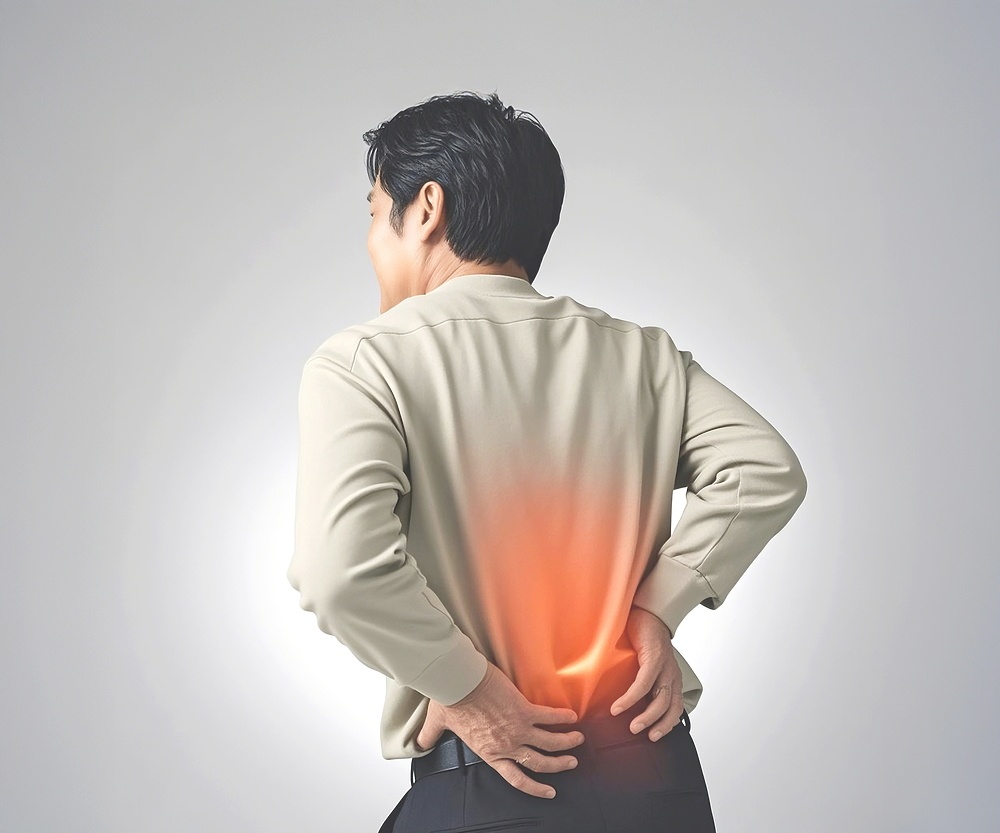
- Maintain good posture: When sitting, keep your lower back against the backrest, avoid crossing your legs, and don't maintain the same posture for too long.
- Stretching: Focus on movements that stretch the back of your legs and gluteal muscles, rather than movements that excessively arch your lower back.
- Sleeping posture: Place a small pillow under your knees to reduce strain on your lower back.
- Weight management: As weight increases, the burden on the spine also increases.
- Exercise: Build strength to support your lower back through consistent aerobic exercise and core muscle strengthening.
The speed at which management effects appear may vary from person to person. What's important is consistency, continuing even for short periods every day.
When to See a Doctor

If you continue to experience sharp pain every time you bend your lower back, it's safer to have your spine and nerves checked rather than dismissing it as simple muscle pain. In particular, if any of the following apply, it's a sign that detailed examination and consultation are needed.
- Sudden, severe pain that prevents you from bending your lower back
- Pain or numbness spreading to your legs
Identifying the cause early and correcting lifestyle habits can accelerate pain relief. The lower back is a part that supports the center of the body, and once damaged, it takes time to recover, so not ignoring the signals of pain is the way to maintain a healthy lower back. If you are curious about the examination procedures, please refer to Examination Guide, and before visiting, please refer to Clinic Hours.
Feel free to ask questions via chat
Dr. Kim Seonhoo (Specialist in Gastroenterology, Specialist in Gastrointestinal Endoscopy) · Meet Our Medical Team · Last reviewed 2026-08-06