

Key Information on Gastroscopy Examination Time, Compiled by a Medical Professional in Jangok-dong.

Hello, this is Sungmo Best Internal Medicine in Jangok-dong. Gastroscopy is recommended for regular check-ups even without symptoms. The reason is simple: the stomach is an organ that endures for a long time and only reveals pain late. Gastritis, gastric ulcers, Helicobacter pylori infection, and early gastric cancer are all conditions that can progress without clear symptoms.
However, there are other questions that often come up first in the examination room.
- "How long does the examination take, and how should I fast?"
- "Which is better, sedated endoscopy or unsedated endoscopy?"
These are certainly valid concerns. So, today, we have compiled information on gastroscopy examination time, fasting methods, and the differences between sedated and unsedated procedures, along with practical criteria.
Gastroscopy Examination Time: How Long Does It Actually Take?
The entire process, from preparation to recovery, usually takes within 30 minutes to 1 hour. The actual time the endoscope spends observing the stomach is relatively short, around 5 minutes.
| Category | Estimated Time |
|---|---|
| Observation only | 3-5 minutes |
| With biopsy and Helicobacter pylori test | 7-10 minutes |
| Entire process (preparation to recovery) | 30 minutes-1 hour |
| Sedated endoscopy (including sedative administration and recovery) | Approximately 1 hour |
Tips for the Day of the Examination
- If you want to finish your schedule quickly, we recommend booking the first appointment slot. It makes fasting easier and allows you to complete recovery by the morning.
- Please avoid driving on the day you receive sedated endoscopy.
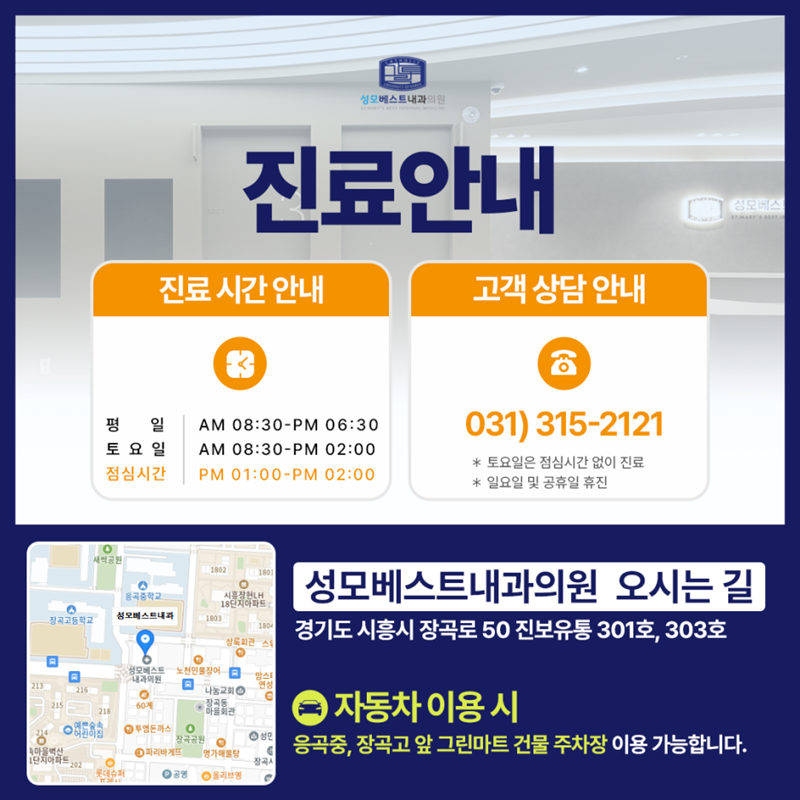
You can check available visiting hours in the Clinic Hours Guide.
Fasting Before the Examination: How to Prepare
Gastroscopy directly examines the inside of the stomach, so the stomach must be empty to accurately observe any lesions. If there is residual content, the accuracy of the examination may decrease, and there is a risk of vomiting or aspirating stomach fluid.
The Day Before the Examination
- Finish dinner lightly before 9 PM.
- Avoid greasy and slow-digesting foods such as samgyeopsal (pork belly), fried chicken, cheese, and dairy products.
- Light meals that are easy on the stomach, such as porridge, rice, and soup, are recommended.
On the Day of the Examination
- Do not eat or drink anything, including water. Gum, coffee, and milk are also prohibited.
- Some medications, such as blood pressure medication, can be taken with a small amount of water, but prior consultation with Sungmo Best Internal Medicine is necessary.
- Smoking is also prohibited as it stimulates gastric acid secretion and gastrointestinal motility, which can interfere with the examination.
Please note that the examination itself may be canceled if fasting instructions are not followed properly.
Sedated vs. Unsedated: Which One Should You Choose?
This is one of the most frequently asked questions in the examination room. To put it simply, there is no single correct answer, and the choice depends on your health status, medical history, and previous examination experiences.
When Sedated Endoscopy May Be More Comfortable
- If you have experienced stopping an examination due to nausea.
- If your blood pressure rises or your heart beats fast when you are nervous.
- If the thought of endoscopy makes you feel scared and anxious.
- If you have been told that you have a strong gag reflex due to your oral structure.
- If you have had a comfortable experience with sedated endoscopy in the past.
If three or more of these apply to you, sedated endoscopy may be more comfortable.
When Unsedated Endoscopy May Be More Suitable
- If you have a history of drug hypersensitivity reactions.
- If you do not have enough recovery time due to your schedule on the day.
- If you are elderly or have underlying conditions such as respiratory, cardiac, or kidney disease.
- If you want to view your condition together during the examination and return home immediately after the consultation.
It is most important to share your condition and medical history before the examination and decide on the method together. If you are curious about the examination procedure, please refer to the Examination Guide.
Things to Remember Before Postponing Your Examination
Those who postpone examinations often cite reasons such as "being afraid of the endoscopy itself" or "finding fasting or time burdensome." However, there is a clear fact.
- Gastric cancer generally has a better treatment outcome when discovered early. Of course, this may vary from person to person.
- Gastritis or Helicobacter pylori infection can be diagnosed with endoscopy, and improvement can be expected with medication.
- Dangerous situations like gastric bleeding and ulcers can also be anticipated and addressed through endoscopy.
While there are now many ways to receive the examination comfortably and quickly, what's more important is receiving it on time. Endoscopy is not an examination to endure pain, but one to reduce future suffering. We recommend checking the gastroscopy examination time in advance and receiving it regularly.
Feel free to ask any questions about examination schedules or other inquiries via chat
Dr. Kim Seonhoo (Specialist in Gastroenterology, Specialist in Gastrointestinal Endoscopy) · Medical Staff Introduction · Last reviewed 2026-08-06