
Hello, this is Sungmo Best Internal Medicine, performing colonoscopies in Siheung. A colonoscopy is a representative examination that can precisely check for digestive diseases, and there is one more factor that determines the results, just as much as the equipment and the skill of the operator. That is what you ate up until the day before the examination.
If the bowel is not properly emptied, the reliability of the interpretation may decrease, no matter how good the equipment used to examine it. In actual outpatient cases, examinations are often stopped or re-examinations are recommended due to insufficient bowel preparation, and the cause is usually unexpected foods that patients ate, thinking, "that much should be fine."
What seems like a light meal can remain in the intestines for a long time and obstruct the view. The real problem is that this can lead to missing opportunities for early diagnosis. Today, we will explain why pre-examination meals are important, what to eat and what to avoid, and common mistakes patients make, all at once.
Why Your Pre-Examination Diet Determines the Results
A colonoscopy is an examination that directly observes the colon lining to identify lesions such as inflammation, polyps, and cancer early. If food or undigested dietary fiber remains in the intestines, the lining may be obscured, making interpretation difficult and potentially leading to missed lesions.
Not only does the examination time lengthen and repeated washing become necessary, but in some cases, the examination itself may be canceled or a re-examination may be required. Therefore, dietary control the day before the examination is a key factor in determining the quality of the examination. If you are curious about the overall examination procedure, you may want to check our Examination Guide first.
Start Dietary Control 2-3 Days Before the Examination
It is usually ideal to start dietary control 2-3 days before the examination. If you usually enjoy high-fiber foods or have irregular bowel movements, you should start a little earlier to ensure easier bowel preparation.
Foods to Avoid
The following foods remain in the intestines or are difficult to excrete, obstructing the view during the examination.
- Fruits with seeds (e.g., oriental melon, kiwi, grapes, watermelon): Seeds do not pass and stick to the lining.
- High-fiber vegetables (e.g., seaweed, dried laver, various seasoned vegetables, mushrooms, cabbage): Leave a lot of residue.
- Multi-grain rice, brown rice, nuts: Insoluble fiber adheres to the intestinal wall, hindering preparation.
- Fried foods, oily foods: Slow down bowel movements, reducing the effectiveness of preparation.
- Dairy products such as milk and yogurt: Create intestinal gas and some interfere with bowel cleansing.
Surprisingly, many people think that porridge or bananas would be fine, but the grains mixed in porridge or the fiber in bananas can also obstruct the view, so it is safer to avoid them if possible.
Recommended Foods (Low-Residue Diet)
From 1-2 days before the examination, please compose your meals with a low-residue diet, which leaves minimal residue.
- White rice, white porridge (excluding multi-grains)
- Boiled potatoes, egg whites
- Clear broth without solids
- Soft tofu, boiled chicken breast
- Vanilla-flavored yogurt without solids
- Water, rice water, electrolyte drinks, clear fruit juice without pulp
From the Evening Before the Examination
From the evening before, it is advisable to reduce meal portions, focusing on clear liquid foods and water. After you start taking the bowel cleansing agent, you must fast.
What Happens If Dietary Control Is Not Followed
- Increased patient burden due to longer examination time
- Possibility of missing lesions as polyps, inflammation, and early cancer may be obscured
- Loss of examination fees and time due to re-examination recommendations
- Unclear treatment plans due to insufficient result reports
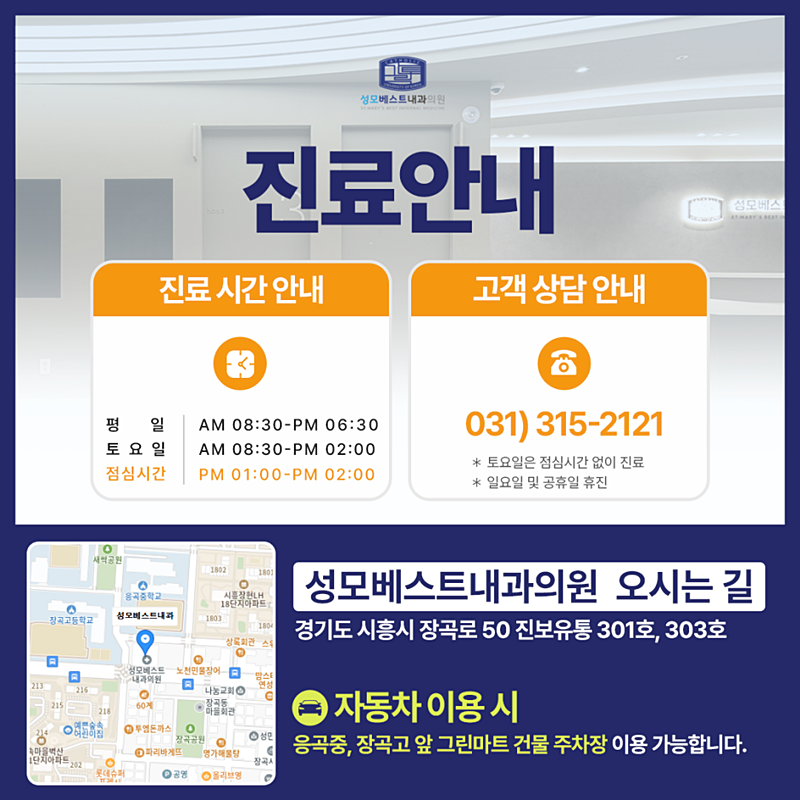
The accuracy of a colonoscopy depends on how well the bowel is cleansed, and the starting point for that is your diet a few days before the examination. At Sungmo Best Internal Medicine in Siheung, we provide guidance on pre-examination dietary control and bowel cleansing methods tailored to each patient's individual bowel habits and eating habits. If you consider meal preparation as part of the examination, the reliability of the results will be different. If you need to confirm anything before making an appointment or visiting, please refer to our Clinic Hours Information.
If you have any questions, please feel free to inquire via chat.
Dr. Kim Seonhoo (Specialist in Gastroenterology, Specialist in Gastrointestinal Endoscopy) · Meet Our Medical Team · Last reviewed 2026-08-06