


Why Screenings When You Have No Symptoms Are More Meaningful
Even if you look perfectly fine on the outside, changes can be slowly progressing inside your body. This progression is difficult to detect with a single test; it only becomes apparent when comparing the results of screenings taken at regular intervals. The items you need to check vary depending on your age, lifestyle, and family history, so if you can check all the necessary tests in one place, like with a Janghyeon-dong health check-up, it can reduce the burden on your busy schedule. In fact, many people make screenings a part of their lives and manage their health consistently.

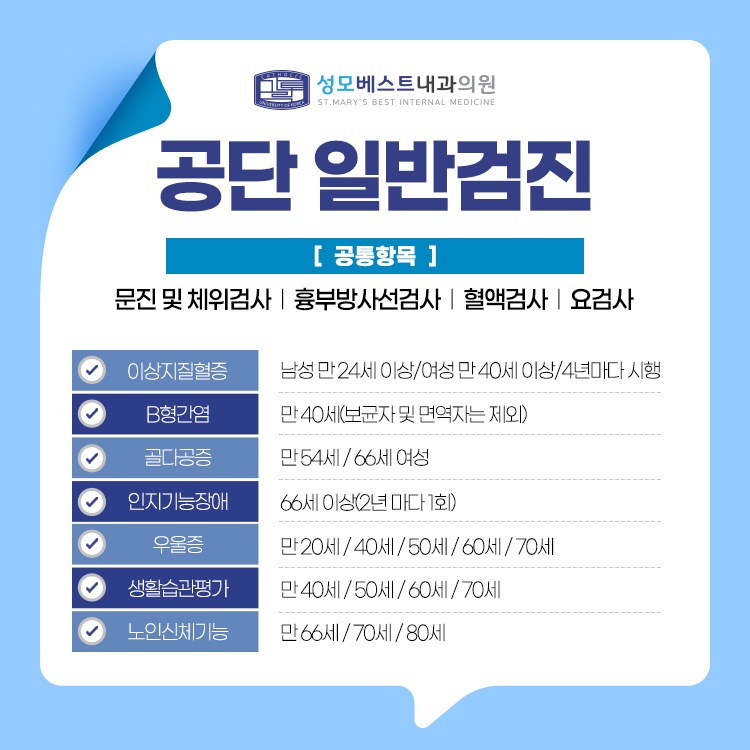
What Basic Tests Check For
Even basic items can reveal the overall flow of your body.
- Blood pressure, vision, and hearing measurements
- Blood and urine tests
- Chest X-ray
- Lifestyle-related indicators such as changes in liver enzyme levels, blood sugar elevation, and cholesterol levels
If you frequently feel tired or experience repeated weight changes, these basic tests can be a clue to discovering small changes. It's often the case that signals that are difficult to recognize on your own in the early stages are revealed during this process, which is why regular check-ups should be the standard for managing your health.
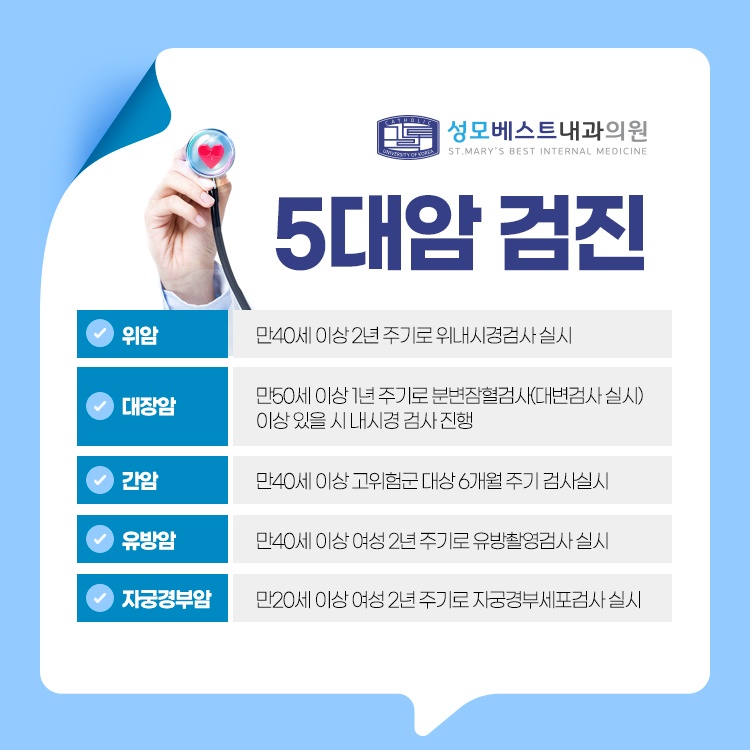
National Cancer Screenings, Together According to Age Criteria
National cancer screenings, which you need to take when you reach a certain age, can also be guided at Janghyeon-dong health check-ups.
| Item | Examination Method |
|---|---|
| Stomach Cancer | Direct visual confirmation of the mucous membrane with an upper endoscopy |
| Colorectal Cancer | Fecal occult blood test, followed by a colonoscopy if necessary |
| Liver Cancer | Liver ultrasound and blood test |
| Breast/Cervical Cancer | Performed according to age criteria |
If you have a family history or feel that your physical condition is not what it used to be, these check-ups can be a starting point for understanding your body's condition. Another advantage is that you can undergo all the tests at once without having to visit different hospitals for each item.

Deeper Examination with Endoscopy and Ultrasound
When digestive discomfort or abdominal tightness recurs, an endoscopy is often considered. Upper and lower endoscopies meticulously check for common changes such as stomach inflammation, ulcers, and polyps. In particular, colon polyps can be removed if found, reducing future risks, so regular checks are beneficial.
Ultrasound examination is a test that examines changes in the shape of organs that are difficult to detect from the outside, such as the liver, gallbladder, pancreas, and kidneys. Thyroid or carotid artery ultrasounds are items that check areas easily affected by lifestyle habits and can be selected as needed. If you are curious about the procedures for each test, it is a good idea to check them in advance in the Test Guide.
Preparing for Your Check-up: Just Remember This
Since each test requires different preparations, it is important to follow the precautions you are given.
- For tests requiring fasting, avoid food intake for the specified time.
- Wear comfortable clothing on the day of the test.
- During the pre-screening consultation, items can be adjusted according to your lifestyle and health status.
Even those undergoing a check-up for the first time can participate without difficulty after a pre-consultation. When planning your visit, it is convenient to check the Clinic Hours Guide as well.

The Difference Consistent Check-ups Make
Health check-ups do not end with checking the results; they become a standard for planning subsequent health management. The signals your body sends are subtle, but with regular check-ups, you can catch these changes and maintain a healthy daily life. The check-up cycle and necessary items may vary from person to person, so it is best to determine them through consultation.

If you have questions about check-up items or appointments, feel free to inquire via chat.
Dr. Kim Seonhoo (Specialist in Gastroenterology, Specialist in Gastrointestinal Endoscopy) · Medical Staff Introduction · Last reviewed 2026-08-06